

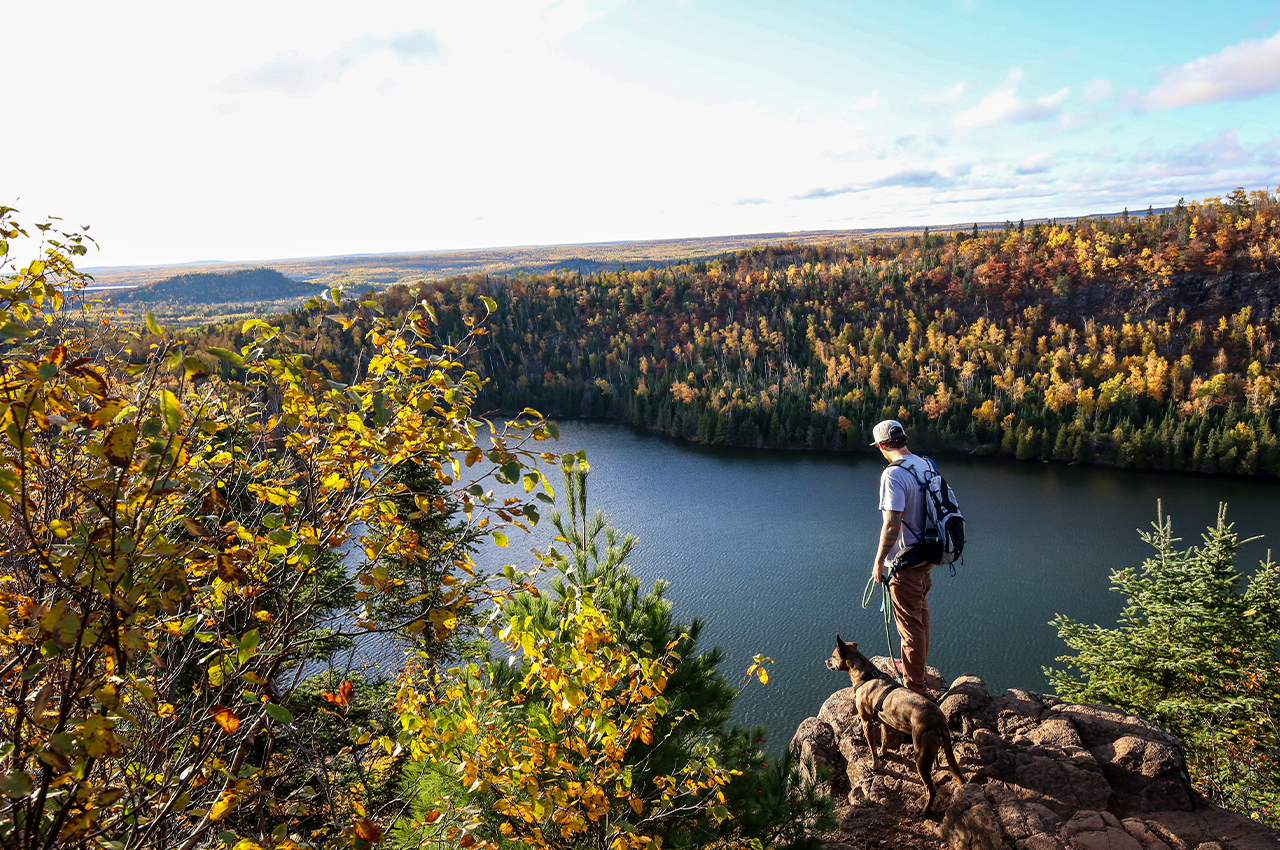
Bean & Bear Lakes. Photo: Alyssa Hei
Minnesota is a big place.
With just slightly less land mass than the entire United Kingdom, the state simply cannot be fully appreciated in a single trip to one city or area. To truly discover what the Land of 10,000 Lakes (really it’s 11,842, but who’s counting?) has to offer, you’ll need to experience the state’s 11 micro-regions, each with its own distinct flavor and menu of sights and adventures—all worthy of a weekend (or more) of exploring.
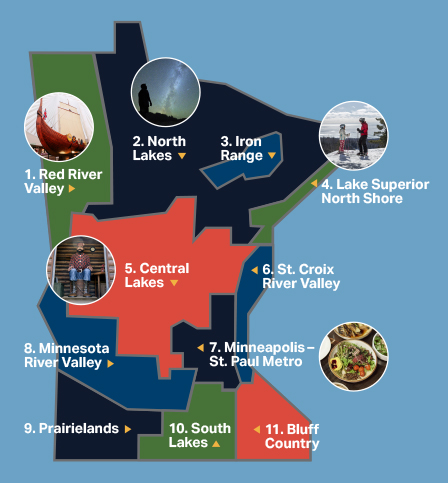
1. Red River Valley
The great wide open (and birthplace of the Dilly® Bar). Photo: Davin Wait
2. North Lakes
Remote wilderness, big water, and dark skies, home to Voyageurs National Park and the Boundary Waters. Photo: Paul Vincent
3. Iron Range
Dramatic turquoise waters and thrilling mountain bike ranges.
4. Lake Superior North Shore
The world’s cleanest, largest freshwater lake, and 150 miles of public shoreline alongside it.
5. Central Lakes
Lake life at its peak — throw a rock, hit a resort. Photo: Andrew Parks
6. St. Croix River Valley
Dripping-in-charm, river towns and so, so many apples.
7. Minneapolis – St. Paul Metro
The thriving heart of Minnesota is also the nation’s most nature-filled metro.
8. Minnesota River Valley
Rich Dakota history and secluded natural landscapes.
9. Prairielands
Wind-swept native prairies where bison roam free, the landscape that inspired Laura Ingalls Wilder.
10. South Lakes
Artsy college towns, charming main streets and world-class bass fishing.
11. Bluff Country
Limestone bluffs to underground caves and the world’s top-ranked hospital.
Dive into each of these regions below.
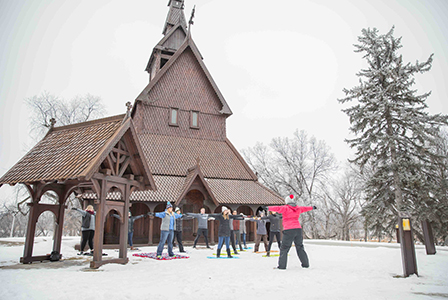
Hjemkomst Center, Moorhead
1. Red River Valley
Nestled along the North Dakota border, the Red River Valley is a laidback region with natural beauty and out-of-this-world attractions like the Northern Lights, which you can see in Hallock. Check out the state’s largest observation tower at Lake Bronson State Park and go birdwatching at Agassiz National Wildlife Refuge, Glacial Ridge National Wildlife Refuge, and the Pine to Prairie Birding Trail. Visit Moorhead’s Hjemkomst Center in Clay County’s Historical & Cultural Society to experience a full-scale replica of the famous Gokstad ship found in Norway and the town’s annual Frostival event.
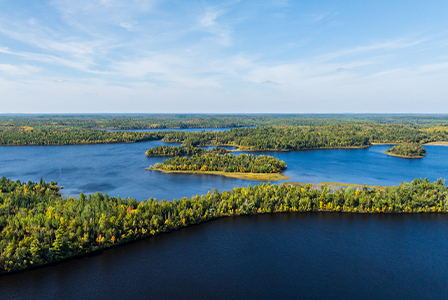
Boundary Waters, Ely
2. North Lakes
Untouched, pristine landscapes rule the North Lakes, one of the world’s most remote places that includes Boundary Waters Canoe Area Wilderness, Voyageurs National Park, Superior National Forest, the headwaters of the Mississippi River, and the northernmost point in the contiguous United States. Don’t miss Danish artist Thomas Dambo’s world-renowned troll sculptures in Detroit Lakes; Willie Walleye, a 40-foot sculpture in Baudette; and Paul Bunyan and Babe the Blue Ox in Bemidji. Hike a loop in The Lost 40, an old-growth red pine forest. Drive, snowshoe, or cross-country ski The Gunflint Trail, a National Scenic Byway in the Superior National Forest with an average 100 inches of snow per year. Ice skate the Christmas tree-lined Riverbend Skate Pathin Warroad, the world’s longest (just over 5 miles); it’s free and so are the groomed cross-country ski trails that run alongside it.
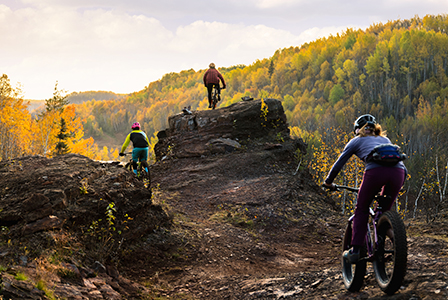
Redhead Mountain, Chisholm
3. Iron Range
An enclave within the northeast Minnesota’s North Lakes region, the Iron Range sits on four major iron deposits and is dotted with massive, decommissioned open-pit mines, which have created expanses of turquoise water for paddling, steep hills for mountain biking, and a golf course unlike any other. For an itinerary with slightly less adrenaline, head to Hibbing and visit Hull Rust Mine, the largest open-pit iron ore mine and called the “Grand Canyon of the North,” Bob Dylan’s childhood home, and the Greyhound Bus Museum. In Eveleth, you’ll find the US Hockey Hall of Fame and the World’s Largest Hockey Stick. Peep rare birds at Sax-Zim Bog (between the towns of Sax and Zim) and see wolves and bears in Ely. You can check the giant loon floating on Silver Lake off your “World’s Largest” list, soak in views from the state’s tallest bridge in Virginia, and drive the Superior National Forest Scenic Byway, a 78-mile route toward the Lake Superior North Shore.
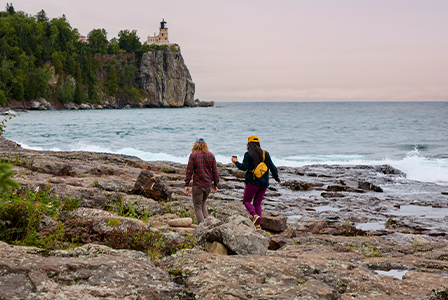
Split Rock Lighthouse State Park, Two Harbors
4. Lake Superior North Shore
This region has 150 miles of public shoreline along the world’s cleanest, largest freshwater lake and is peppered with family-friendly vacation towns. Duluth is the jewel city of the North Shore while Grand Marais is a pictureperfect village named “Best Small Lake Town” by Travel + Leisure. Hike the 300-mile Superior Hiking Trail and chase waterfalls in the eight state parks. The iconic Split Rock Lighthouse is a national historic monument you can tour. Winter off ers several unique experiences: fat biking and ice climbing at Misson Creek; no fewer than 95 runs at Lutsen Mountains (the largest Midwest ski resort); dramatic, oceanlike wave crashes during the Gales of November; and North Shore Scenic Railroad’s magical holiday rides straight out of The Polar Express.
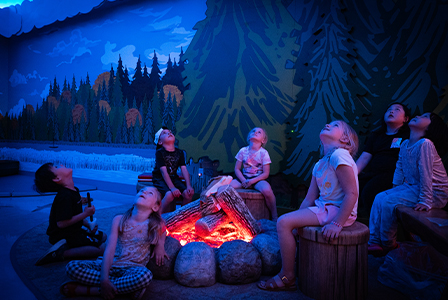
Great River Children’s Museum, St. Cloud
5. Central Lakes
There’s no better place to live the lake life than this part of the state, which is home to some of the most swimmable and boatable bodies of water in charming resort towns like Brainerd, Nisswa, and Alexandria. There’s plenty to do on dry land as well. See the world’s most famous lumberjack at Paul Bunyan Land in Brainerd and Big Ole, the world’s largest Viking, at Legacy of the Lakes Museum in Alexandria. Got kids in tow? Stop at Great River Children’s Museum in St. Cloud and visit Nyberg Sculpture Park in Vining with 10 whimsical sculptures by construction guy-turned-sculptor Ken Nyberg. In summer, golfing, and biking are top activities. In winter, don’t miss the Brainerd Jaycees Ice Fishing Extravaganza, one of the nation’s largest ice fishing events.
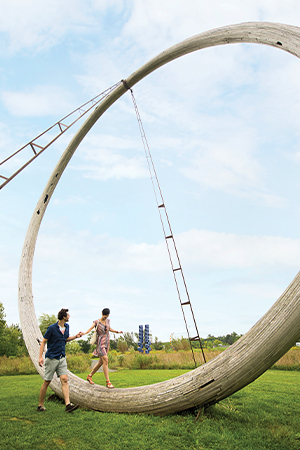
Franconia Sculpture Park, Shafer. Photo: Roy Son
6. St. Croix River Valley
This region follows the state’s eastern border, where the St. Croix Scenic Byway, a 145-mile driving route that begins in Point Douglas and continues up to the North Shore, is a vision after the first snow. Franconia Sculpture Park—a free, 50-acre outdoor museum that is open 365 days a year—is another “whoa” experience. Visit four state parks in the St. Croix River Valley: Afton, Interstate, St. Croix, and William O’Brien. Spend time at Afton Alps, a skiing and snowboarding area that boasts 300 acres of skiable terrain, 50 trails, and a state-of-the-art snow-making system; and Wild Mountain, a massive family-friendly complex offering skiing, tubing, and lessons for beginners of all ages.
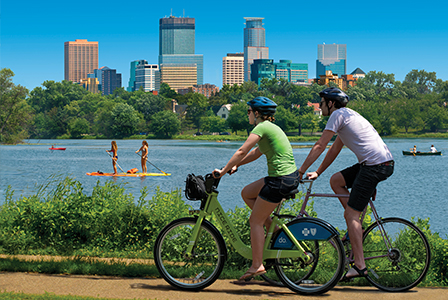
Minneapolis
7. Minneapolis – St. Paul Metro
The Twin Cities metro area is Minnesota’s beating heart with endless opportunities to explore. Minneapolis and St. Paul are separated by the Mississippi River but have grown together to form one very happy metropolis. In fact, Minneapolis is ranked Gold Tier by The Institute for Quality of Life’s Happy City Index—a distinction shared only with New York City. It’s also the best city for new college graduates and the fourth most livable city in America. It boasts the third-best park system, the fifthmost vibrant arts economy, and is perennially ranked as a top biking city (yes, even in winter). The Cities offer a nearly endless panoply of delights.
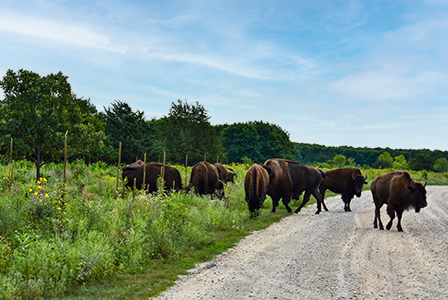
Minneopa State Park, Mankato
8. Minnesota River Valley
Dramatic waterfalls, quiet riverwalks, and the state’s biggest Oktoberfest meet rich Dakota history in the quiet, leafy Minnesota River Valley. Explore the Minnesota River Valley Scenic Byway, running from Big Stone Lake to Belle Plaine. Visit Mankato’s Minneopa State Park for sweeping views and the chance to see a herd of bison. Pro tip: Turn on your radio to listen to the prerecorded interpretive information. Also in Mankato, follow the City Art Walking Sculpture Tour, then visit Carnegie Art Center and the Children’s Museum of Southern Minnesota. Hike to waterfalls in Cansayapi (Ramsey Park) and grab a selfi e with the world’s largest ear of corn in downtown Olivia. The Mount Kato Ski Area is an ideal destination for families of all skill levels.
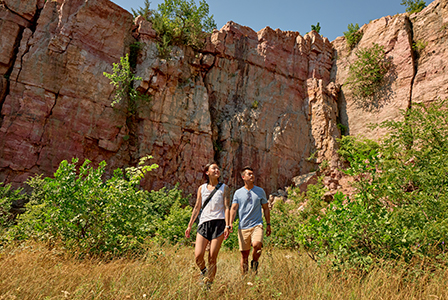
Blue Mounds State Park, Luverne. Photo: Paul Vincent
9. Prairielands
Only about 4% of America’s native tallgrass prairie remains—and this is the best place to experience it. In the southwest corner of the state, grasses and wildfl owers ripple across the horizon at Touch the Sky Prairie in Hardwick, Hole in the Mountain Prairie Preserve in Lake Benton, and Camden State Park in Lynd. At Jeffers Petroglyphs near Comfrey, explore more than 5,000 carved images represent both the Native American history of the region and the landscape’s spiritual significance. The quartzite cliffs at Blue Mounds State Park in Luverne and Pipestone National Monument are nothing short of awe-inspiring. For some of the best pheasant hunting in the country, this region offers more than 65,000 acres of public hunting land for the October to January season. In Walnut Grove, follow in the footsteps of a beloved author and explore pioneer life at the Laura Ingalls Wilder Museum.
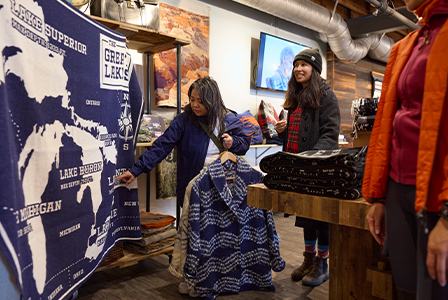
Faribault Woolen Mill. Photo: Paul Vincent
10. South Lakes
This district is home to one of Minnesota’s most recognizable products: SPAM. Austin’s free museum is a tribute to the iconic canned meat. Another popular homespun product: Faribault Woolen Mills’ iconic blankets. Tour the mill and shop the factory store. In Blue Earth, a 55-foot-tall Jolly Green Giant—and his museum— welcomes visitors. Head to Northfield for the smells, stay for the charm. The college town smells sweet thanks to a nearby Malt-O-Meal plant, and December’s Winter Walk is a magical holiday event in this Hallmark movie-esque town. Another location straight off the screen: Nerstrand Big Woods State Park, known for its hidden waterfalls. Thousands of years ago, Indigenous Americans quarried chert (flint) for tools. The Grand Meadow Chert Quarry/Wanhi Yukan Preserve is an 8-acre site where visitors can see more than 80 mine pits.
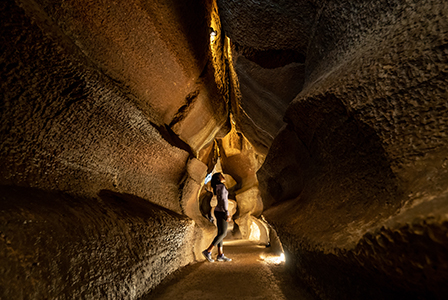
Niagara Cave, Harmony. Photo: Ryan Taylor
11. Bluff Country
In the southeastern corner of the state, “the Driftless Region” is home to the world’s best hospital according to Newsweek—the Mayo Clinic in Rochester. But as Bluff Country’s name implies, it’s full of dramatic peaks and abundant, jaw-dropping views. Also breath-stealing: Mystery Cave, with 13 miles of naturally formed passages, and Niagara Cave (it has a subterranean wedding chapel!). Above ground, more than 700 miles of trout fi shing streams where anglers catch brook, brown, and rainbow trout. At the National Eagle Center in Wabasha, visitors can hang out face-to-face with the center’s inhabitants. There’s unmissable visual art at Winona’s Minnesota Marine Art Museum and bronze sculptor Charles E. Gagnon’s studio and sculpture garden in Rochester. Rochester also has the Quarry Hill Nature Center, a 329-acre park with miles of biking and hiking trails, and in cold weather, the city’s downtown transforms for Social-ICE, an all-out celebration of winter.
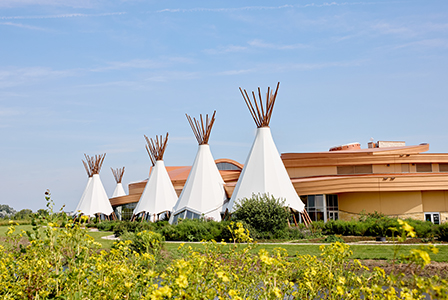
Shakopee Hoċokata Ṫi Cultural Center, Shakopee. Photo: Paul Vincent
Shared Geography
The land that we now call Minnesota has been inhabited for thousands of years by indigenous peoples and today, 11 federally recognized tribes call the Land of 10,000 Lakes home. Many tribes own and operate casinos, golf courses, and resorts, as well as museums, cultural centers, and environmental stewardship programs to maintain sustainably harvested crops like wild rice and walleye.
- In the Red River Valley, the White Earth Band, an Anishinaabe nation, has lived on the land of north central Minnesota for thousands of years.
- Three Tribal Nations share geography with the North Lakes region of Minnesota: Bois Forte Band of Chippewa, Leech Lake Band of Ojibwe, and Red Lake Nation.
- On Lake Superior’s North Shore, the Fond du Lac Band of Lake Superior Chippewa and the Grand Portage Band have a long legacy.
- Mille Lacs Band of Ojibwe, a sovereign nation of Ojibwe people, is dedicated to preserving their language and culture in the Central Lakes region.
- In the Minneapolis-St. Paul metro, the Shakopee Mdewakanton Sioux Community owns and operates numerous enterprises.
- The Upper Sioux Community and Lower Sioux Indian Community have occupied the land of the Minnesota River Valley for thousands of years.
- In Bluff Country, the Prairie Island Indian Community, who descend from the Bdewakantunwan (Mdewakanton) Band of Eastern Dakota, are the largest employer in Goodhue County.




Show Comments (0)